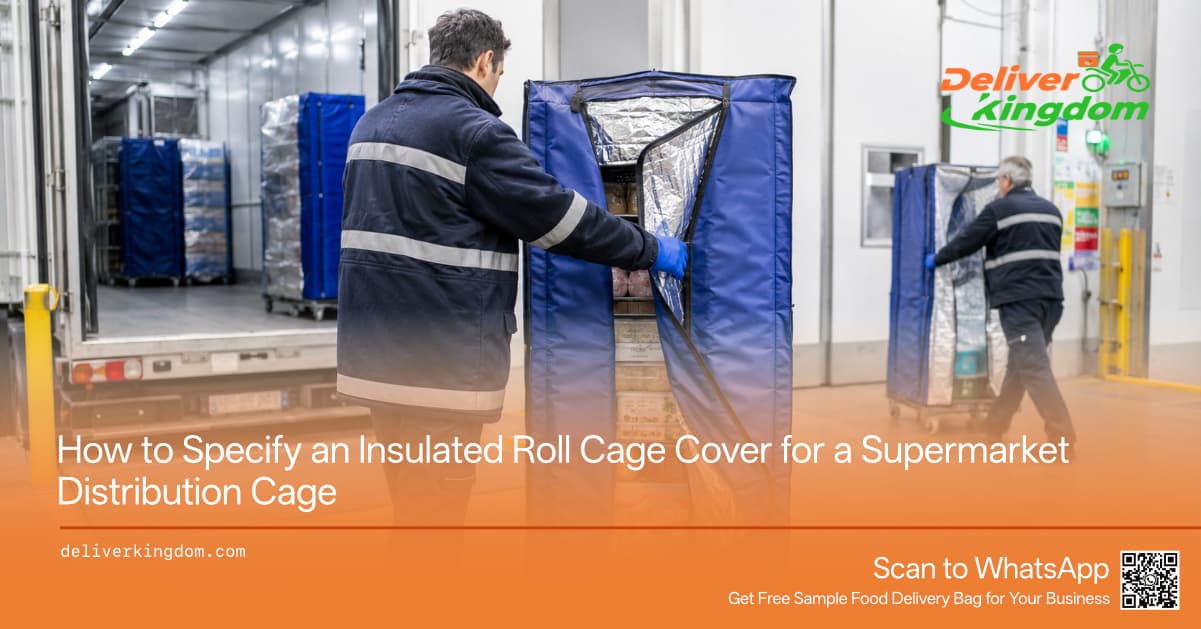
スーパーマーケットの配送センターが、製品写真だけを頼りに大量の断熱カバーを発注することはまずありません。ウェブサイト上では良さそうに見えても、実際に倉庫に届いてからが本当の問題です。ロールケージに引っかからずにスムーズに装着できるか?作業員は手袋をしたままでも素早く開けられるか?ジッパーの位置はケージのドアと合っているか?積み込み用スロープやドックプレート、凹凸のある床の上をケージが通過する際に、底面はしっかりと保護されるか?
東南アジアのスーパーマーケット流通業者から最近寄せられた問い合わせは、まさにこの実用的なアプローチに沿ったものでした。購入者は、より大規模な購入プログラムを検討する前に、運用テスト用に断熱ロールケージカバーを2つ必要としていました。ロールケージの寸法は、幅約660mm、長さ約830mm、高さ約1901mmでした。テストユニットは、すべての製品が完璧に機能する会議室に展示されるのではなく、実際の冷蔵食品流通プロセス内で使用される予定でした。
特注の断熱ロールケージカバーを評価するには、まず2つのサンプルから始めるのが賢明な方法です。1つは通常のルートでテストし、もう1つは比較、バックアップ、または異なる積載条件で使用できます。倉庫チームは、より大きな注文を承認する前に、フィット感、取り扱いやすさ、熱安定性、クリーニング、ジッパーのアクセス性、生地の摩耗などを確認できます。
この種の試作は、製造業者にとって有益なフィードバックをもたらします。図面にはケージの寸法が明確に示されているかもしれませんが、後になって作業員が上部のクリアランスがもっと必要だったり、前面のフラップは別の方向から開くべきだったり、底辺が車輪に近すぎたりすることに気づくかもしれません。2ピースの試作を行うことで、何百、何千ものカバーを生産する前に、こうした細部を修正することができます。
スーパーマーケット向け配送用サーマルロールケージカバーの場合、サンプルテストは遅延ではなく、製品開発プロセスの一環です。試作段階で慎重に調整を行うことで、機器に正しくフィットしない、美しく印刷されたカバーを大量に無駄にしてしまうことを防ぐことができます。
多くの購入者から最初に寄せられる質問は、標準的な断熱ロールケージカバーが既存のケージに適合するかどうかです。場合によっては適合することもあります。しかし、カバーをケージにかぶせてみると、底部がベースから40mmも浮いてしまうこともあります。
660 × 830 × 1901 mmという寸法のケージは、一般的な物流用ケージのフォーマットに近いものの、高さが特殊なため、注意深く確認する必要があります。同じ公称サイズとされている2つのケージでも、上部フレームの設計、キャスターの位置、外部ハンドル、ヒンジ構造、ドアの形状、フレーム周囲の有効クリアランス量などが異なる場合があるからです。
このため、断熱ケージトロリーカバーの製造業者は、詳細な情報を確認することなく、既製品のカバーが完璧にフィットするとすぐに約束すべきではありません。標準的な参考サンプルが入手可能な場合もありますが、製造業者はその完成品の内部寸法を実際のケージの外形寸法と比較する必要があります。断熱材の厚みや縫い目の構造も、使用可能な内部空間を減少させます。
特注の断熱ロールケージカバーには、通常、多少の余裕が必要です。余裕が少なすぎると、カバーの取り付けや取り外しが難しくなり、角やヒンジ、金属バーなどに引っかかる可能性があります。逆に余裕が多すぎると、生地がたるみ、隙間が大きくなり、見た目も悪くなります。また、余分な生地が車輪に絡まったり、床を引きずられたりする可能性もあります。
したがって、正しい判断基準は単に「標準」か「特注」かという二択ではありません。より適切な問いは、既存のカバーがケージの図面、写真、および主要な構造詳細と照合されているかどうかです。適合性が不明確な場合は、サイズ調整済みのサンプルを使用する方が安全です。
DeliverKingdomは、サンプル製作前に、ロールケージの寸法、製品写真、ドアの位置、キャスターの配置、必要な開閉方向などを確認することができます。2013年に設立されたDeliverKingdomは、広東省陽春市に12,000平方メートルを超える生産施設を運営しており、400名以上の従業員が保冷配送およびコールドチェーン包装プロジェクトをサポートしています。
目的は、一つの標準カバーがすべてのケージに適合すると主張することではありません。目的は、倉庫スタッフが実際に機器に取り付けた際に、試用カバーがきちんと機能することを確認することです。
幅、長さ、高さは出発点ではありますが、完全な仕様ではありません。
幅660mm、長さ830mm、高さ1901mmと記載されているロールケージの場合、購入者はまず、これらの寸法が最大外寸であるかどうかを確認する必要があります。記載されている幅は金属製のバスケット部分のみを計測したもので、車輪、ハンドル、ヒンジ部分はそれよりも外側に突き出ている場合があります。また、高さにはキャスターホイールが含まれているものの、カバーはキャスターホイールより上で止まるように設計されている場合もあります。こうした違いによって、カバーの仕上がり長さが変わってきます。
開口部の構造もサイズに影響します。前面パネルを完全にジッパーで開けて上方に巻き上げる必要がある場合、製造業者はケージのドアの開始位置と終了位置を把握しておく必要があります。作業員が両側からアクセスする必要がある場合は、前面の開口部だけでは不十分な場合があります。ケージへの荷物の積み込み方によっては、上部フラップ、側面アクセス、または分割ドア設計の方が実用的かもしれません。
特注の断熱ロールケージカバーは、断熱材の厚みも考慮する必要があります。多層構造の素材は、単純なダストカバーよりもかさばります。外側の生地、フォーム、反射裏地、縫い目、縁取りなどを組み立てると、完成した内寸は裁断時の寸法よりも小さくなります。そのため、ケージの寸法をそのまま製造指示書にコピーすると、数値上は一致していても、実際にはきつすぎるカバーができてしまう可能性があるのです。
サンプルを作成する前に、ケージ全体の写真、正面図と側面図、ドアの開閉方向、車輪の位置、上部フレームの形状、ハンドルの位置、想定される積載高さなどの情報があると役立ちます。作業員がケージを使用している短いビデオがあれば、さらに多くのことが分かります。例えば、作業員が頻繁に片側からケージを引っ張っていること、カバーを完全に外さずにアクセスする必要があること、狭い冷蔵室のドアからケージを押し込んでいることなどが分かるかもしれません。
スーパーマーケットの配送用断熱ロールケージカバーの場合、装飾的な特徴よりも、こうした運用上の細部が重要になります。ファスナーの位置が適切であれば、積み込み作業のたびに時間を節約できます。底辺の寸法が正確であれば、生地の損傷を防ぐことができます。適切なクリアランスがあれば、作業員1人で無理やりフレームにカバーを被せることなく取り付けることができます。
DeliverKingdomは、サイズ開発、開口部構造、ファスナー位置、生地の組み合わせ、裏地、断熱材の厚さなど、お客様のご要望に合わせたカスタマイズに対応しています。このアプローチにより、一般的な寸法リクエストを、単なる表計算上の仕様ではなく、実際の配送プロセスに適合する製品へと変換します。
スーパーマーケットの配送センターでは、冷蔵品、冷凍品、生鮮品、温度に敏感な商品などが、店舗に届くまでに複数のゾーンを経由することがよくあります。ロールケージは、温度管理された冷蔵室を出て、積み込みドック付近で待機し、車両に積み込まれ、店舗の荷受けエリアを通過し、スタッフが荷降ろしを完了するまで外気にさらされます。こうしたあらゆる移動の過程で、温度変化が生じる可能性があります。
断熱ロールケージカバーは、冷蔵トラックや冷蔵室の代わりになるものではありません。その役割は、荷役、積み込み、輸送中の熱伝達率を低減することです。これは、ケージが管理された環境外にある短時間の場合や、冷蔵貨物の周囲に追加の保護が必要な場合に特に有効です。
スーパーマーケットの配送用断熱ロールケージカバーは、通常、複数の素材層で構成されています。外側の生地は、摩耗、埃、湿気、および倉庫内での日常的な接触に対する耐性を高めます。中間の断熱層は熱伝導を遅らせます。内側のライニングは、選択された素材に応じて、反射性または清掃しやすい表面を提供します。構造全体が積載されたケージを覆いながらも、ジッパーまたはフラップを通してアクセス可能です。
その価値は、混雑した荷積み場でより明確になります。冷蔵ケージは、複数の車両が割り当てられるまで待機する場合があります。倉庫のドアは頻繁に開閉し、暖かい外気が積み込みエリアに入り込みます。スタッフは順番にケージを移動させますが、すべてのケージがすぐに車両に届くわけではありません。適切な断熱カバーがあれば、この待機期間中、製品をさらに保護することができます。
長期間の使用を想定し、カバーは実用性も兼ね備えている必要があります。作業員は複雑な手順なしに簡単に取り付けられるべきです。アクセスパネルは素早く開閉できる必要があります。素材は狭い場所を頻繁に通過しても耐えられるものでなければなりません。カバーが車輪に引っかかったり、ケージの操縦を妨げたりしてはなりません。
正確な熱性能は、製品の開始温度、周囲温度、積載密度、断熱材の厚さ、開閉頻度、輸送時間、保冷剤やその他の冷却方法の使用の有無など、多くの条件によって異なります。そのため、責任ある製造業者は、試験条件を理解せずに単一の数値を提示することは避けるべきです。
2種類のカバーを用いた実地試験により、スーパーマーケットのチームは自社の流通条件下で実際のデータを収集できる。このデータは、異なる袋、気候、または積載方法から得られた実験室での数値よりもはるかに有用である。
ロールケージカバーは温度をある程度良好に保つことができるが、作業員が製品に迅速にアクセスできない場合は、機能的に失敗する可能性がある。
開閉方法は、ケージへの荷物の積み下ろし方法に合わせるべきです。一般的な設計では、前面パネルを開けてもカバーの残りの部分がケージに付いたままになる、高さのある前面ファスナーを採用しています。これは、ケージのドアも前面から開く場合にうまく機能します。ただし、ファスナーの位置はケージの構造に合わせる必要があります。ヒンジ、ラッチ、または金属バーの真上にファスナーがかかってしまうと、アクセスが困難になります。
配送センターによっては、U字型のファスナー開口部を好むところもあります。一方、フロントパネルを巻き上げて上部で固定できるように、縦方向のファスナーを2つ必要とするところもあります。荷降ろしの際にフラップを固定するために、ベルクロを追加することもできます。頻繁に繰り返し使用されるため、ファスナーの引き手は、手袋を着用している場合でも倉庫作業員が素早く操作できる十分な大きさが必要です。
A custom insulated roll cage cover may also require side access. This can be useful when cages are placed closely together and the front cannot be opened fully. In other cases, workers may need a top flap to check products or insert cooling media without opening the entire front panel.
Every additional opening creates a trade-off. More access can improve handling, but it also introduces more seams and potential air gaps. The design should therefore include only the openings that the operation actually needs. Adding five zippers because it looks versatile usually results in a more complicated and expensive cover that nobody enjoys using.
The two-sample trial is the right time to evaluate these details. Workers can time how long it takes to open, unload, close, and move the cage. They can report whether the zipper direction feels natural, whether the flap stays out of the way, and whether any fabric catches on the frame.
As an insulated cage trolley cover manufacturer, DeliverKingdom can adjust the zipper position, flap style, access direction, fastening method, and handle openings according to the cage and warehouse process. OEM and ODM support allows buyers to begin with an existing drawing or develop a new structure from photos and operational requirements.
A good opening system is not the most impressive part of the cover. It is simply the part warehouse staff will use hundreds of times, which is generally a stronger test of value than how elegant the product looks in a catalog.
Material selection should begin with the working environment, not only with the lowest unit price.
A supermarket distribution center exposes an insulated roll cage cover to metal cage edges, concrete floors, loading docks, moisture, food packaging, repeated folding, and frequent cleaning. The cover may be installed and removed several times per day. It may also be compressed during return transport or stored in a busy warehouse where equipment is rarely treated with ceremonial gentleness.
For the outer layer, buyers may consider durable polyester, Oxford fabric, PVC-coated material, or other abrasion-resistant fabrics. The correct choice depends on required flexibility, water resistance, expected service life, cleaning method, and budget. A very thick fabric may offer stronger protection but can make the cover heavier and less convenient to fold.
The insulation layer can be adjusted according to the thermal target and handling requirements. Thicker insulation may slow heat transfer more effectively, but it also increases bulk, packed volume, and product weight. For a thermal roll cage cover for supermarket distribution, the most suitable construction should balance thermal performance with daily handling.
The inner lining should be easy to clean and compatible with the intended products. Reflective foil materials are often selected for thermal applications, while other smooth linings may be preferred for flexibility or repeated wiping. The seams, edge binding, zipper tape, and reinforced areas should also be considered because material quality alone cannot compensate for weak construction.
High-contact areas may need additional reinforcement. These include the top corners, lower edges, zipper ends, lifting points, and sections that rub against cage bars. If the cover will be folded frequently, the material should tolerate repeated bending without cracking or separating.
DeliverKingdom can support fabric customization, insulation structure selection, inner lining choices, zipper specifications, color matching, and dimensional adjustments. The company holds BSCI and ISO9001 certifications and has more than 13 years of insulated bag manufacturing experience.
The sample stage should confirm whether the proposed material feels suitable in real use. Warehouse staff can check whether the cover is too heavy, too stiff, difficult to fold, easy to wipe, or vulnerable around the lower edge. These observations help refine the final custom insulated roll cage cover before mass production.
An operational trial should answer more than one question.
Many buyers test only whether the cover fits the cage. Fit is important, but it is only the first checkpoint. A complete trial should also examine installation time, access speed, movement, thermal performance, cleaning, folding, wear, and staff feedback.
The first test is dimensional fit. The cover should slide over the cage without excessive force. It should not be so loose that large air gaps form around the top and sides. The lower edge should remain clear of wheels and moving parts. Zippers should align with the cage opening, and the cover should not block handles or latches.
The second test is daily handling. Staff should install and remove the cover several times. They should open the access panel while the cage is fully loaded. The warehouse team should move the cage through actual cold rooms, staging zones, loading docks, vehicle ramps, and store receiving areas. This reveals whether the material catches, shifts, or interferes with steering.
The third test is thermal performance. The distribution center can place temperature loggers at selected points inside the loaded cage and compare covered and uncovered conditions. The test should record ambient temperature, product starting temperature, loading density, opening frequency, route time, and any use of cooling media. Without these details, the result is difficult to interpret.
The fourth test is cleaning. Any spills or moisture should be wiped using the normal warehouse procedure. Staff should check whether liquid collects in corners, whether the lining dries properly, and whether repeated wiping affects the material.
The fifth test is durability. Even a short trial can reveal stress around zipper ends, seams, lower corners, and fold lines. Staff feedback is also valuable. A warehouse operator may notice an inconvenient zipper position in thirty seconds that nobody noticed during three weeks of office discussion. Humanity occasionally becomes efficient when given real equipment.
For a custom insulated roll cage cover, the trial results should be documented before bulk approval. Small adjustments can then be made to the dimensions, opening, material, reinforcement, or branding.
This process gives both the buyer and the insulated cage trolley cover manufacturer a clear reference for final production.
A request for two samples usually includes three commercial questions: the unit price, the total cost for two pieces, and the express shipping charge.
The sample price depends on whether an existing suitable cover can be supplied or whether a new custom sample must be produced. A standard reference sample may have a different cost from a size-adjusted sample requiring new cutting, material preparation, and logo setup. If the trial covers are unbranded and use available materials, development may be simpler. A fully customized structure with specific fabric, insulation, zippers, and printing requires more preparation.
For this reason, a supplier should confirm the cage details before quoting. It is not useful to provide an attractive sample price for a product that later turns out to be the wrong size.
Shipping cost also requires actual calculation. An insulated roll cage cover may not be extremely heavy, but its packed dimensions can create significant volumetric weight. Express carriers generally compare actual weight with dimensional weight and charge according to the higher figure. The final freight therefore depends on the folded size, carton dimensions, quantity per carton, destination postal code, courier route, and current carrier rate.
Delivery time should also be separated into sample production time and transport time. If a custom sample must be made, the development period comes before courier transit. Express shipment to Southeast Asia may be relatively fast after dispatch, but exact timing should be confirmed when the package details and courier service are known.
DeliverKingdom’s sales team can calculate the sample price, packed dimensions, express options, and estimated lead time after the required structure is confirmed. DHL, FedEx, UPS, or another available courier may be evaluated according to the destination and shipment conditions.
Sensitive information such as the buyer’s exact address, contact details, freight quotation, and commercial terms should remain inside the direct business conversation. A public article should explain the calculation process, not publish a customer’s logistics data for the internet to admire.
For buyers planning a thermal roll cage cover for supermarket distribution trial, the most useful first step is to send the cage dimensions, photos, required quantity, destination country, and preferred material or application. That allows the supplier to prepare a grounded quotation instead of improvising numbers.
A two-piece operational trial usually focuses on fit and performance. If the trial succeeds, branding and fleet standardization become more important for future orders.
A supermarket group may want the insulated covers to match its distribution identity, store branding, or cold-chain program. DeliverKingdom can support custom logo printing, specified Pantone colors, customized dimensions, opening direction, zipper position, insulation thickness, inner lining, reinforcement, label pockets, and other structural details.
A custom insulated roll cage cover can use a single-color logo for a straightforward warehouse appearance or a more detailed print where the selected fabric allows it. The printing method should be chosen according to the outer material, logo complexity, required durability, and order quantity. The sample stage can include a printed logo, but some buyers prefer to validate the structure first and confirm branding after the operational trial.
Color selection is not only decorative. Different colors may identify chilled, frozen, fresh, or store-specific flows inside a distribution center. A supermarket operator could use one color for cold products and another for ambient products, while maintaining the same cover structure. Clear visual separation can help warehouse staff identify the correct cage more quickly.
Transparent document pockets or label holders may also be added for route sheets, store numbers, temperature records, or handling instructions. Reflective strips can improve visibility in dark loading areas. Numbering or barcode labels may support asset tracking where covers move between distribution centers and stores.
For future bulk orders, the final approved sample becomes the production reference. Dimensions, materials, colors, logo position, zipper structure, and packing method should be recorded clearly. This reduces variation across later batches and makes repeat purchasing easier.
As an insulated cage trolley cover manufacturer, DeliverKingdom supports both OEM production based on an existing specification and ODM development for buyers who need structural recommendations. Its 12,000+ square meter factory and team of more than 400 workers allow the company to support customized and higher-volume projects.
The purpose of customization is not to cover every surface with branding. It is to make the cover fit the equipment, fit the process, and fit the buyer’s distribution system.
A successful trial does not automatically mean the sample should be copied immediately into a large order.
The warehouse team should first summarize what worked and what should change. Perhaps the overall fit was correct, but the front zipper should be moved 30 mm. Maybe the lower edge needs reinforcement because it contacted the cage base. The cover may need an additional label pocket, a different flap fastening method, or a slightly larger top allowance.
These are normal findings. The purpose of the trial is to discover them before mass production.
Once the revisions are confirmed, the buyer and manufacturer can prepare a final specification. This should include finished dimensions, fitting allowance, fabric, insulation, lining, zipper type, opening direction, reinforcement areas, logo size, Pantone color, labeling, packing, and inspection standards.
For a supermarket distribution network, bulk demand may later involve several distribution centers, store formats, or cage types. It is useful to confirm whether every location uses the same 660 × 830 × 1901 mm cage or whether there are regional variations. One cover may fit most equipment, while another size may be needed for a smaller or taller cage.
Repeat-order planning also matters. If the cover becomes part of a national distribution process, the buyer may need replacement units, phased deliveries, or future production using the same approved materials. A clear product specification and retained reference sample help keep later orders consistent.
DeliverKingdom was established in 2013 and has more than 13 years of experience in insulated bag and thermal cover manufacturing. The company operates a factory of more than 12,000 square meters in Yangchun, Guangdong, with over 400 workers, BSCI certification, and ISO9001 quality management. It supports OEM and ODM projects, customized fabrics, dimensions, colors, logo printing, insulation structures, and large-order production.
For buyers searching for a custom insulated roll cage cover, a thermal roll cage cover for supermarket distribution, or an experienced insulated cage trolley cover manufacturer, the most reliable process is straightforward: confirm the cage, make the sample, test it in the real operation, revise the details, and then scale production.
標準カバーがあらゆるものに合うと約束するほど魅力的ではないかもしれないが、実際に機能する可能性ははるかに高い。
Q:標準的な断熱ロールケージカバーは、660×830×1901mmのケージに適合しますか?
A:可能性はありますが、確定前に適合性を確認する必要があります。製造元は、ケージの最大外形寸法、車輪の位置、ハンドル、ヒンジ、ドア構造、および必要な底部クリアランスを確認する必要があります。適合性が不確実な場合は、特注サンプルを作成する方が安全です。
Q: DeliverKingdomは、テスト用に断熱ロールケージカバーのサンプルを2つだけ製造することは可能ですか?
A:試作品の開発については、運用テストのためにご相談いただけます。試作品の費用は、既存の適切なサイズが入手可能かどうか、または特注構造を製作する必要があるかどうかによって異なります。最終的な価格は、ケージの詳細と材料要件を確認した後に確定します。
質問:スーパーマーケットは断熱ロールケージカバーをどのようにテストすべきですか?
A:試験では、フィット感、設置時間、ファスナーの開閉、ケージの動き、保温性能、清掃性、折りたたみやすさ、縫い目の強度、裾の摩耗、およびスタッフからのフィードバックを検証する必要があります。温度試験では、実際のルート条件と積載方法を記録する必要があります。
Q:ロールケージカバーにロゴや特定の色をカスタマイズすることはできますか?
A:はい。DeliverKingdomでは、カスタムロゴ印刷、パントンカラーマッチング、カスタム寸法、開口部構造、ファスナー位置、ラベルポケット、断熱材の厚さ、内張り、補強など、今後の大量注文に対応しています。
Q:サンプル2点の速達送料はどのように計算されますか?
A:速達料金は、梱包されたカートンのサイズ、実重量、容積重量、配送先、郵便番号、および現在の宅配便料金によって異なります。サプライヤーは、DHL、FedEx、UPS、またはその他の宅配便業者の正確な見積もりを提供する前に、完成したサンプル梱包の詳細を確認する必要があります。





 オンラインで見積もりを取得する